

What two villages in Kagera are teaching Tanzania about rubbish in the countryside
Picture a Tuesday afternoon in Kabingo. School is out. A group of children, some barely tall enough to lift the sack they are carrying, walk slowly along the path behind the houses. They bend, pick up a crushed water bottle, a juice sachet, and a torn wrapper. Someone keeps count. By the end of the afternoon, the sacks are heavy, and the path looks like it did before plastic arrived.
What if one of Tanzania’s best ideas for dealing with rubbish came not from a laboratory or an office, but from a village where children decided to put plastic on trial?
In Kabingo and Kitobo villages in Missenyi District, Kagera Region, young people and their communities have done just that. They call it Mahakama ya Taka Ngumu, the Solid Waste Court. Some children act as lawyers, presenting evidence and arguing their cases, while others serve as judges, deciding the fate of the discarded materials. The evidence comes in sacks: it is sorted by hand and weighed in kilograms. The court’s first verdict is simple: rural communities face a real solid-waste problem, and waiting for a city-style collection service will not make it disappear.
This blog shares what the children have found, where national plans leave villages out, and what needs to happen next.
A World Problem That Reaches the Village
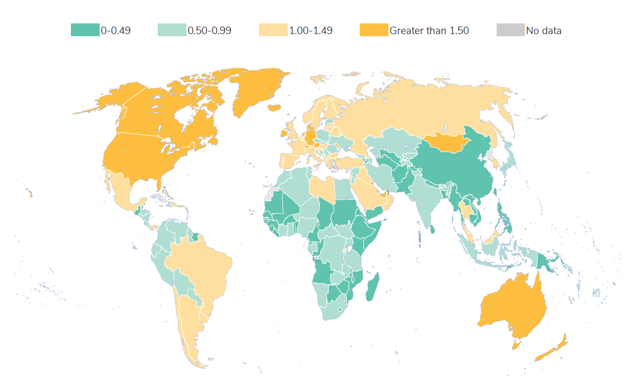
The world is producing more rubbish every year. The World Bank says the world produced 2.56 billion tonnes of household and town rubbish in 2022. If nothing changes, that could rise to 3.86 billion tonnes a year by 2050.
But the question that matters most is the local one. What happens when packaged goods reach a village where nobody collects, sorts or takes away what is left? Anyone who has walked through a rural trading centre on market day knows the answer. Rubbish ends up in soil and water. It blocks drains and makes flooding worse. When it is dumped or burned, it pollutes the air that families breathe.
Villages Are Being Overlooked
Tanzania already struggles to deal with its rubbish. A 2021 study by the Centre for Science and Environment (CSE) estimated that the country produces 12 to 17 million tonnes a year. Only about half is collected. Almost a third of all rubbish is buried, and about one-sixth is simply dumped wherever there is space. Only 5 to 10% is recycled, and more than 90% is not disposed of safely.
There is another problem: we know very little about rubbish in villages. The same study found that most research in Tanzania was done in Dar es Salaam, and those city results were often used to describe the whole country. So, villages get less help, and their rubbish is barely counted.
On paper, the law is clear. The Environmental Management Act makes local councils responsible for collecting rubbish in both urban and rural areas, as the CSE assessment sets out. But most villages still have no bins, no collection points, no transport, no place to sort rubbish, no buyers of recyclable materials and no safe place to get rid of what is left. This is not a city problem that has spread to the countryside. It is a village problem.
Think about the last thing you bought at a village kiosk: a soda, a sachet of cooking oil, a packet of biscuits. It arrived by truck, by motorcycle, by bicycle. But nobody comes back for the empty packet. The product reaches the village. Responsibility for the packaging does not. The CSE report makes the same point: small sachets are cheap and popular, but they are hard to collect and cannot be recycled, and the companies that sell them should help take them back.
Even in the city, this is not just about people’s habits. When researchers spoke to 102 residents of Manzese and Sinza in Dar es Salaam, the biggest reason people gave for rubbish piling up was the cost of collection. Many said a monthly fee of TSh 500 to 1,000 was more than their household could manage. Others pointed to missing dumping points and rules that nobody enforced. Only about one in ten households used a bin. If families in the country’s biggest city struggle like this, imagine a village where the nearest collection truck may be hours away. Telling people to be careful with rubbish helps, but it is not enough. Villages need a working service, and businesses, recyclers and local councils must help build it.
National Plans Still Focus on Towns
This gap is not new. Tanzania’s National Solid Waste Management Strategy of 2018 opens by describing urban solid waste as a serious environmental problem. It says it aims for good waste management in “urban and rural centres”, but after that it mentions rural areas only in passing, and its early goals were set for “key urban areas”.
The new Fourth Five-Year Development Plan (FYDP IV), which runs from 2026 to 2031, follows the same path. It admits that the country does not manage its rubbish well, but when it sets clear goals, it looks mostly at towns and cities.
Its main rubbish goal is to collect rubbish from 60% of town areas by June 2031. The actions under that goal are also about towns: more trucks, bins and collection points for town areas; new treatment and recycling plants in big towns; partnerships with private companies to build large recycling plants; and cutting uncollected rubbish in towns by 30%. Plastics are mentioned, but mainly as pollution in the ocean, lakes and rivers.
Villages are left out of these goals. This stands out because the same plan does set separate village goals for clean water and toilets. There is no matching goal for collecting or safely getting rid of rubbish in villages. The only thing that might reach villages is a national campaign telling people how to dispose of rubbish safely, and a campaign alone cannot collect a single bag.
What is not counted usually does not get money. If villages are missing from the plan’s goals, they will probably be missing from budgets and council reports too. The plan could fix this by adding a village rubbish collection goal, counting what rubbish villages produce, and setting a goal to reduce burning and dumping.
What the Solid Waste Court Found
Kabingo and Kitobo started with what they could see: plastic bottles, food packaging and other everyday rubbish around homes, footpaths and public places. Their question was simple: how can a village deal with its own rubbish when there is no proper service? The court’s answer is a step-by-step process: collect it, weigh it, sort it, move it, reuse or sell what can be saved, and safely get rid of the rest.
In Kabingo, the first collection gathered 107 kilograms. The second gathered 133 kilograms: 43 kilograms of plastic bottles and 90 kilograms of other rubbish. That is 240 kilograms in two rounds, roughly the weight of three grown adults, picked up by children’s hands. In Kitobo, about 300 kilograms were collected, but this is a rough estimate because there was no scale to weigh it. These numbers show only what was collected, not all the rubbish the villages produce.
The rubbish is brought to the court’s collection area, sorted, and then carried by motorcycle to where it is disposed of. Sorting matters. According to the same assessment, more than 70% of Tanzania’s town rubbish is food and plant waste that can rot and become compost. The mix in Kabingo may be different, which is why weighing and sorting it locally is so useful. It shows what can be turned into compost, what can be sold, what can go back to the companies that made it and what must be safely thrown away.
Each type of rubbish then needs someone to take it: households for compost, buyers and recyclers for clean plastic, paper, glass and metal, and companies to take back their own packaging. Without these people, sorting just creates neater piles.
For now, waste that cannot be reused or recycled is burned in an incinerator at the village health centre. This offers a practical starting point while the communities develop a more complete waste-management system. As the initiative grows, the next step will be to assess whether the incinerator is suitable for the waste being handled and to explore safer, longer-term treatment options. Every community-led solution begins somewhere. Kabingo and Kitobo have already achieved something important: they have brought people together to collect, sort, measure and discuss their waste, laying the foundation for a sustainable village waste-management service.
Plastic Is Hurting Village Farms
Picture a farmer turning the soil before the rains and finding scraps of old bags and wrappers in every row. In farming villages like Kabingo and Kitobo, plastic that is not collected often ends up where food is grown. It is swept into gardens, dumped at the edge of fields, mixed into manure and compost, or buried. Nationally, the CSE assessment found that almost a third of all rubbish is buried rather than collected, and in a village, “buried” usually means buried in someone’s land.
And there is more of it. In Dar es Salaam, plastic’s share of household rubbish rose from 16% in 2012 to 22% in 2014, according to National Bureau of Statistics figures used in the National Solid Waste Management Strategy. Village shops sell the same products, in the same packaging.
Plastic does not rot. It only breaks into smaller pieces, some too small to see, and they can stay in the soil for many years. The Food and Agriculture Organization (FAO) has warned about plastic building up on farmland. These pieces can stop rain from soaking into the ground and make the soil dry out faster, which hurts crops most in dry seasons. They can make the soil harder, so seeds struggle to come up and roots struggle to grow. They can also harm earthworms and the tiny living things in the soil that turn dead plants into food for new crops. And when plastic gets into manure and compost, the very thing that should make the soil richer ends up spreading plastic instead. Even the national strategy lists soil contamination among the dangers of dumping rubbish carelessly.
Burning plastic does not solve the problem. The ash and smoke leave harmful chemicals that settle on land used for crops and grazing. Plastic bags lying around can also kill the cows and goats that families depend on.
For farming families who live on each season’s harvest, this is about food and income, not just the environment. The national plan itself says poor care of soil is holding back harvests, and it aims to reduce damaged land from 16% to 14% by 2031. Keeping plastic out of farms should be part of that effort. Every kilogram the Solid Waste Court collects is a kilogram that will not end up in the fields that feed the village.
Small Numbers Can Add Up
The amounts collected so far are small, but they can grow. Suppose each village collects 100 kilograms from each of its four sub-villages every two months. That is about 2.4 tonnes a year per village. If all 12,318 villages in Mainland Tanzania did the same, it would add up to about 29,563 tonnes, nearly 30 million kilograms, every year.
This is an example, not a prediction. It is based on only a few collections and assumes every village takes part regularly and has transport and a safe place to take the rubbish. Still, it shows two things. Small village efforts can make a national difference. But children and villages cannot fix this alone.
Young People Leading, With Adults Doing Their Part
The most powerful thing about the Solid Waste Court is not the collection point. It is the moment a child holds up a bottle and asks, “Where is this supposed to go?” Young people are turning into a problem everyone has stopped noticing into facts that adults, leaders and companies cannot ignore.
The project involves 77 primary and secondary school pupils. One group has 16 pupils, 7 boys and 9 girls aged 4 to 16. The other has 61 pupils, 37 boys and 24 girls aged 7 to 14. They belong to Generation Z and Generation Alpha, but what matters most is what they are doing: turning what they learn about the environment into real action. After school, they join organised clean-ups and help their parents, neighbours and village leaders see what the community throws away and where it should go.
Safety and learning come first. Before taking part, pupils are taught how to recognize and avoid needles, medical waste, chemicals and other hazardous materials. They do not burn waste or carry it in unsafe ways. Their participation is a supervised environmental-learning activity that builds responsibility, teamwork and care for their community. To recognize and celebrate their contribution, Third Alternative and its partner, Kabingo Agro Social Enterprise, provide the pupils with school supplies after each collection. This support reinforces their learning and is not linked to the quantity or type of waste collected, ensuring that children are never encouraged to collect more waste or expose themselves to danger.
What Needs to Happen Next
The Solid Waste Court started in two villages, but it raises a question for the whole country: once a village has collected, weighed and sorted its rubbish, who takes it from there?
A village can organise clean-ups and count its rubbish. But it cannot, on its own, create buyers for recycled materials, make companies take back their packaging, pay for long-distance transport or approve a safe disposal site. District councils, recyclers, manufacturers, schools, health centres and funders each need to play their part. Our local partner Kabingo Agro Social Enterprise can help by bringing people together, organising collection and linking the village to councils and businesses. But it cannot do their jobs for them.
This fits with Tanzania’s Development Vision 2050 (DIRA 2050), which calls for less pollution, better rubbish management and making money from materials people throw away. FYDP IV, the plan that puts this vision into action over the next five years, should include villages in its rubbish goals. Kabingo and Kitobo show what that could look like on the ground.
Success should be measured by more than kilograms collected. We should also ask: Is rubbish being sorted safely? Does each type reach the right place? What does the service cost, and who pays? Can it create income? Is less plastic ending up on farms? Is less rubbish being burned or dumped?
The children have made their case. They have walked the paths, filled the sacks and counted every kilogram. Villages need more than advice about rubbish. They need a service that links community effort with support from government, companies and recyclers. Third Alternative invites local councils, manufacturers, recyclers, schools and funders to help build it. The court is in session. Who will answer?